
Adjusting Entry for Unearned Revenue

It is important to note that is unearned revenue a current liability unearned revenue will have to remain a liability on the balance sheet until when the distribution or delivery of what the customer paid for has been done. It is when unearned revenue has been earned that it is converted from a current liability on the balance sheet to an actual revenue that is recorded on the income statement. Once the products or services are delivered, the unearned revenue balance sheet entry is converted into revenue as the value in return for the payment received is delivered.

Unearned Revenue: What It Is, How It Is Recorded and Reported
- The treatment of unearned rent revenue extends beyond the balance sheet and income statement, influencing a company’s tax obligations.
- Baremetrics provides an easy-to-read dashboard that gives you all the key metrics for your business, including MRR, ARR, LTV, total customers, and more.
- This means that advance rent payments are generally taxable upon receipt, even though they may be recognized as revenue over time in the financial statements.
- It is an income statement account that is used to record the amount of rent earned during a given period.
- Since unearned revenue is cash received, it shows as a positive number in the operating activities part of the cash flow statement.
Deferred revenue affects the income statement, balance sheet, and statement of cash flows differently. FreshBooks has online accounting software for small businesses that makes it easy to generate balance sheets and view your unearned revenue. At the end of the month, the owner debits unearned revenue $400 and credits revenue $400.
Income statement
Let us take different scenarios and discuss how to record them through the discussion below. If you have noticed, what we are actually doing here is making sure that the earned part is included in income and the unearned part into liability. The adjusting entry will always depend upon the method used when the initial entry was made. On December 31, 2021, the end of the accounting period, 1/3 of the rent received has already been earned (prorated over 3 months). Unearned revenue is an obligation, not an asset, and is recorded on a firm’s balance sheet. Breaking up their project payments into smaller installments can actually be a big help.
Unearned revenue in cash accounting and accrual accounting
However, since you have not yet earned the revenue, unearned revenue is shown as a liability to indicate that you still owe the client your services. Unearned revenue is also referred to as deferred revenue and advance payments. Let’s consider an example of a company accounting for unearned rent. According to Bookkeeping for Chiropractors the situation and the agreement between the parties, the unearned revenue entry might be different.
The Importance of Unearned Revenue

In fact, according to a study from Freelancer’s Union, 71% of freelancers have trouble getting paid at some point in their careers. You just gained $2,000 in your cash account that you can use to keep your business operations up and running! As great as this sounds, don’t forget that this cash hasn’t been realized (i.e. earned). Baremetrics integrates directly with your payment processor, so information about your customers is automatically piped into the Baremetrics dashboards. First, since you have received cash from your clients, it appears as an asset in your cash and cash equivalents. However, even smaller companies can benefit from the added rules provided in the accrual system, so you may want to voluntarily work with accrual accounting from the start.


Sometimes you are paid for goods or services before you provide those services to your customer. It would go in the “liabilities” category, as it is money owing. The business has not yet performed the service or sent the products paid for.
- If unearned revenue is not recorded as a liability and a company records it at once as a revenue, revenues and profits would initially be overstated.
- Unearned revenue entry is a common feature in various industries.
- In order to calculate the unearned revenue that will be earned for a month, the $12,000 unearned revenue is divided by the 6 months, which will give us $2,000.
- The business has not yet performed the service or sent the products paid for.
- Accounting for unearned rental income is a critical part of ensuring the accuracy of financial records.
- This $2,000 is now what is recognized as the monthly earned revenue over time.
Use Baremetrics to monitor your subscription revenue
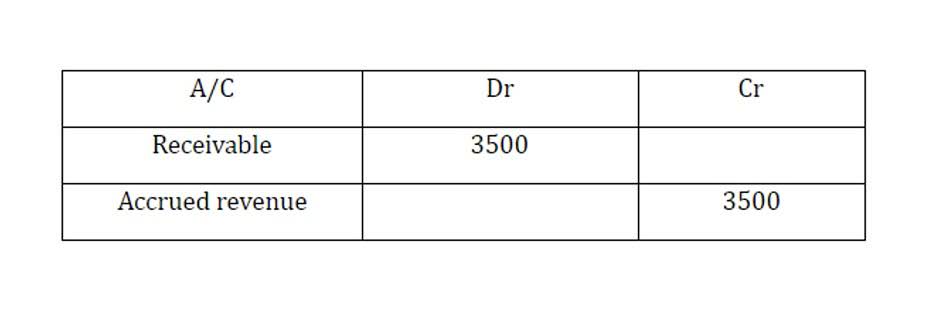
That is, the business is indebted to the customer and is obligated to deliver the paid goods or service at a later payroll date. Therefore, the seller has a liability that is equal to the revenue earned until the paid good or service is delivered. Adjustments may also be necessary for any incentives or concessions offered to tenants.
Find posts on Accounting Journal Entries & Financial Ratios
- Insurance firms and software as service businesses frequently recognise deferred income.
- At this point, no revenue is recognized, but the lease terms are documented, and any initial payments, such as security deposits, are recorded as liabilities.
- Such an unearned revenue example is when a customer pays for a good or service in advance to a company or individual.
- This will ensure that the company is in compliance with any applicable laws and regulations.
- Revenue recognition for unearned rent occurs as the rental period progresses and the space is utilized by the tenant.
- As great as this sounds, don’t forget that this cash hasn’t been realized (i.e. earned).
According to the accrual basis of accounting, income is recognized when it is earned, regardless of when the payment is received. Therefore, at the end of each accounting period, a portion of the unearned rent revenue is transferred to the earned revenue account to reflect the rent that has been earned during that period. This is done through an adjusting entry that debits the unearned rent revenue account and credits the rent revenue account. The amount recognized as earned should correspond to the portion of the lease term that has elapsed. The cash received from a consumer for products or services which have yet to be provided or created is known as unearned revenue.
This standard requires lessees to recognize a right-of-use asset and a corresponding lease liability on the balance sheet, reflecting the present value of future lease payments. Properly recognizing unearned rental income is important for landlords to ensure accurate records. When money is received for a rental, the unearned amount is recorded in the company’s books. This means the money has been received but has not yet been earned. At the end of the month, the unearned revenue is reversed and the amount is recorded as normal revenue.